Gochujang — Spicy Fermented Chili Paste
고추장
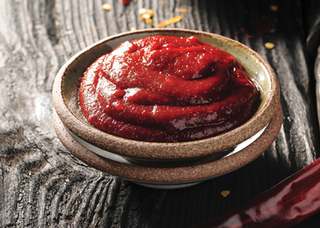
- Salt: coarse rock salt, non-iodized
Ingredients
- Gochugaru (fine-ground red chili powder for gochujang) — 200 g
- Sweet (glutinous) rice flour (chapssalgaru) — 100 g
- Water — 300 ml
- Barley malt syrup (yeotgireum), or if unavailable, rice syrup/light honey — 150 g
- Prepared doenjang paste (fermented soybean paste) — 100 g
- Coarse non-iodized salt — 2 tbsp (about 30 g), to taste
- Extra syrup or sugar — 1-2 tbsp, to taste for balance
Method
- Mix the rice flour into the water, stirring thoroughly to remove lumps, then place over low heat and, stirring constantly, bring to a boil; cook for 8-10 minutes until it reaches the consistency of a thin porridge.
- Remove from heat, stir in the malt syrup, then return to low heat and simmer for another 15-20 minutes, stirring, until the mixture reduces and thickens by about a third.
- Let the mixture cool completely to room temperature — this matters, as a hot mixture will spoil the flavor and kill the doenjang's activity.
- Mix in the doenjang paste and salt, stirring thoroughly until smooth with no lumps.
- Add the gochugaru in small portions, mixing thoroughly each time, until the paste becomes smooth, glossy and richly red; taste and add syrup/sugar to balance.
- Transfer the paste into a sterilized glass or ceramic jar, smooth the surface and press down gently to remove any air pockets.
- Cover with cheesecloth or a loosely fitted lid and leave at room temperature for 2-3 days to start fermenting, then seal tightly and refrigerate.
- Let the paste mature in the refrigerator for at least 1-2 weeks before use — the flavor will become deeper and milder; it keeps in the refrigerator for several months.
Tip. This is a simplified home version. Traditional gochujang is made with meju (fermented soybean blocks) and aged in a clay onggi pot in the sun for 60-90 days or longer, giving a far more complex flavor. Here, meju powder is replaced with ready-made doenjang paste and the aging time shortened to 1-2 weeks, giving a milder, 'young' flavor achievable without a special starter.
Every recipe in the app
40 recipes with photos, a brine calculator for any jar size and full offline use — in the Pickles & Marinades app.
Google PlayRuStore — soon
More recipes
🌶️Adjika🌶️Fermented Chili Tabasco-Style Paste🌶️Tkemali🌶️Ssamjang🌶️Teriyaki🌶️Ponzu🌶️Ezme🌶️Biber Salçası
All recipes →